
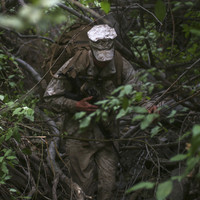
The Pentagon is sending more American troops to Panama for jungle warfare training as Defense Secretary Pete Hegseth widens the U.S. military’s war on drug cartels across Latin America.
Nearly 200 Army soldiers from Fort Drum, a U.S. Army installation in northern New York, are headed to a jungle training facility in the Central American country to sharpen their survival and combat skills.
According to a U.S. official who spoke on condition of anonymity to discuss internal military deliberations, the troops will not be conducting counter-narcotics training. The official told The Hill on Thursday that the soldiers will return to the U.S. after finishing the multiweek course, though they may also train with forces from Honduras, Colombia and Guatemala.
U.S. Southern Command (Southcom), which oversees military operations in Central and South America, declined to comment.
A Pentagon official said the Bilateral Jungle Operations Training program, in which American and Panamanian forces train together, reflects the Americas Counter Cartel Coalition’s (A3C) work with allies and partners.
“This sharpens the capabilities of U.S. and partner nation troops in harsh jungle environments like the remote areas in which cartels hide,” the official said, adding that the Pentagon does not discuss specific force posture or mission details for operational security reasons.
The U.S. military brought back jungle warfare training with Panamanian forces last fall for the first time in more than 20 years. Troops run weapons drills and learn survival skills such as purifying water, moving through dense vegetation and building shelters. Members of the Army, Marine Corps, Air Force and Space Force have trained at Base Aeronaval Cristóbal Colón, formerly known as Fort Sherman.
Not everyone is sold on the move. Lee Schlenker, a research associate at the Quincy Institute for Responsible Statecraft, said the administration is right to focus on the region, but warned that surging troops without proper congressional authorization or a clear legal rationale risks an “interminable war” with no clear exit strategy. He also argued the effort could do little to address the forces fueling the drug trade, including demand, corruption, lack of formal jobs and weak judicial and law enforcement institutions.
The New York Times first reported the deployment, but the U.S. embassy in Panama pushed back, calling claims of 600 U.S. troops “categorically false.” The embassy said 120 service members from the 10th Mountain Division at Fort Drum are taking part in a two-week course and will return home after it wraps on Oct. 25.
The training comes as the Pentagon ramps up its multifront campaign against cartels. The U.S. military has been blowing up alleged drug boats in the Caribbean and Eastern Pacific, strikes that have drawn scrutiny from Democratic lawmakers. U.S. forces have also begun intercepting refueling vessels off Ecuador and embedding with Ecuadorian authorities on raids against alleged traffickers.
Southcom Commander Gen. Francis L. Donovan told The Hill the command’s plan centers on dismantling illicit networks, attacking their logistics, preventing their regeneration, bolstering partner security and building a strong coalition.
The U.S. has assembled a 19-nation coalition in Central and South America and sent MQ-9 Reaper drones to the region. Honduras and Guatemala have requested joint operations with U.S. forces.
Earlier this month, Hegseth signaled some U.S. troops could be shifted from Europe to the Western Hemisphere, stressing that the military is at “war” with drug cartels.
