
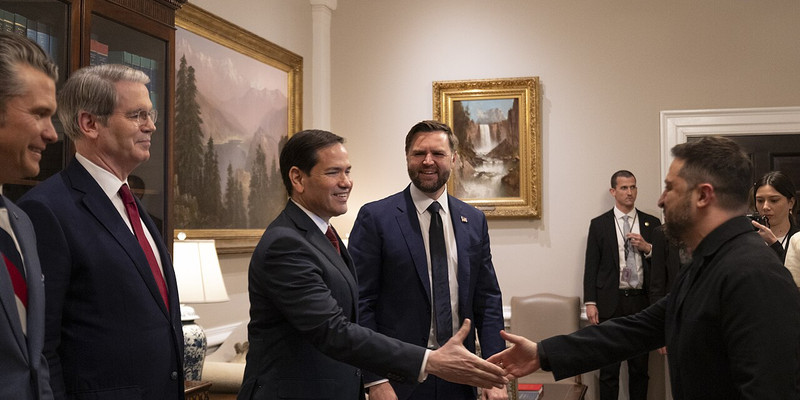
Secretary of State Marco Rubio reportedly played a key role in preventing Defense Secretary Pete Hegseth from announcing a new reduction of U.S. forces in Europe last month, according to a Thursday exclusive from The Wall Street Journal.
The newspaper reported that Hegseth had planned to inform NATO’s top military leaders during a June meeting in Brussels that the Pentagon was preparing another round of troop reductions across Europe.
According to people familiar with the matter, the proposal included additional force cuts beyond the previously canceled armored brigade rotation to Poland and the withdrawal of an infantry brigade from Romania.
However, after Hegseth’s proposal was circulated among senior administration officials, including Rubio, it was reportedly rejected.
Rather than announcing new reductions during the Brussels meeting, Hegseth instead told NATO officials that the Pentagon would begin a comprehensive review of the U.S. military’s force posture in Europe.
According to The Wall Street Journal, that review could take as long as six months to complete.
The report highlights what the newspaper described as ongoing disagreements within the Trump administration over how quickly and how extensively the United States should reduce its military presence on the European continent.
President Donald Trump has repeatedly argued that America's European allies should shoulder more responsibility for their own defense.
Hegseth has likewise urged NATO members to assume what he has described as the “primary responsibility” for defending Europe.
According to the report, however, Hegseth’s efforts to pursue deeper troop reductions have raised concerns among some U.S. allies as well as members of Congress.
The Journal reported that some Republican lawmakers are concerned a rapid reduction in American forces could weaken NATO and embolden Russia.
Those concerns have prompted lawmakers to include language in pending defense legislation that would prevent the Pentagon from reducing troop levels in Europe below 76,000 unless Hegseth first provides both a military risk assessment and certification supporting the move.
The report also described an earlier disagreement involving troop deployments to Poland.
According to The Wall Street Journal, President Trump was surprised when Hegseth canceled Poland’s routine armored brigade rotation in May.
The newspaper reported that Trump personally called the defense secretary to ask “why he was treating a valued ally so poorly.”
Following that conversation, Trump announced that he would instead send 5,000 troops to Poland.
The White House declined to directly address the Journal’s reporting, referring the newspaper’s questions to the Pentagon.
Pentagon chief spokesman Sean Parnell defended Hegseth’s handling of the issue in a statement provided to the newspaper.
According to Parnell, Hegseth “ensured his message was aligned with the president’s objectives and agenda, and he did not want to impede upon the president’s decision space.”
The Wall Street Journal’s report portrays an administration still debating the pace and scope of potential force reductions in Europe while broader discussions over the U.S. military’s long-term presence on the continent continue.
For now, rather than announcing immediate troop cuts, the Pentagon is moving forward with its review of the American military posture in Europe, with any future decisions expected to come after that assessment is completed.
